
The polished concrete floors pros and cons for homes are worth understanding carefully before you sign off on a flooring decision you’ll live with for decades. It’s a finish that looks stunning in the right space, but it comes with real trade-offs that a glossy showroom visit won’t always reveal.
What Is Polished Concrete Flooring?
Polished concrete is created by mechanically grinding down a concrete surface using progressively finer diamond-tipped abrasives, then sealing it to achieve a smooth, reflective finish. The process can be done on a freshly poured slab or an existing one, and the end result can range from a low sheen (sometimes called a satin finish) to a high-gloss mirror-like surface.
How much of the aggregate, meaning the stones embedded in the concrete, gets exposed during grinding determines the final look. A light grind keeps the surface flat and grey. A deeper grind reveals the pebbles within, creating a terrazzo-style appearance that many homeowners find striking. Both options are durable, but they behave slightly differently underfoot and require different levels of care.
Why Polished Concrete Is Growing Popular in Sri Lankan Homes
Sri Lanka’s tropical climate is actually one of the best arguments for polished concrete. In a country where temperatures regularly sit above 30°C, a material that stays naturally cool underfoot has obvious appeal. Bare feet are the norm in most Sri Lankan homes, and polished concrete rewards that habit with a smooth, refreshingly cool surface during the heat of the day.
Contemporary Sri Lankan architecture has also shifted toward open-plan layouts, large windows, and indoor-outdoor flow. Polished concrete suits this aesthetic perfectly. It photographs beautifully, pairs well with exposed brick or timber accents, and holds its own against the bold colours many local homeowners love in their walls and furnishings. Designers working on high-end residential projects in Colombo and the hill country have been specifying it with increasing confidence for several years now.
Key Pros of Polished Concrete Floors for Homes
Durability is the headline advantage. A properly installed polished concrete floor, on a well-prepared slab, can easily last fifty years or more without replacement. Compared to tile, which chips, or vinyl, which can peel and discolour, concrete simply endures.
Maintenance is genuinely minimal. Day-to-day cleaning requires nothing more than a damp mop and a mild pH-neutral cleaner. There are no grout lines to scrub, no wax to reapply annually, and no special products needed. For busy households, that matters.
The heat tolerance is excellent. Concrete doesn’t warp, expand, or delaminate in the Sri Lankan heat the way some timber-look flooring options do. It also reflects light, which can reduce your dependence on artificial lighting in well-positioned rooms.
Over a full building lifecycle, polished concrete often works out cheaper than alternatives. The upfront cost may be higher than basic ceramic tile, but when you factor in zero replacement costs, minimal maintenance products, and longevity, the maths typically favour concrete. Design versatility rounds it out: stains, dyes, and different grind levels mean no two polished concrete floors are identical, which gives homeowners real creative input.
Key Cons of Polished Concrete Floors for Homes
Hardness is the most immediate downside. Concrete is unforgiving underfoot during long periods of standing, which is worth considering for kitchens where you might spend an hour at the bench. Anti-fatigue mats can help, but they break the visual continuity that makes the finish attractive in the first place.
Slip risk is a genuine concern, particularly in wet areas. A high-gloss finish can become slippery when water hits it. This is a manageable risk with the right sealer and a slip-resistant additive, but it requires a contractor who knows what they’re doing. Cutting corners here creates a real hazard, especially for elderly family members or young children.
In air-conditioned rooms, the cool feel of concrete can become uncomfortably cold, particularly in bedrooms. Rooms that sit at 22°C overnight can feel stark without a rug or some textile softening. This is less of an issue in naturally ventilated spaces, but worth planning for in bedrooms or study rooms with split-unit ACs.
Cracking is the con that causes the most anxiety. Concrete does crack; that’s simply its nature. Structural movement, poor subfloor preparation, or inadequate curing during installation can all cause visible cracks. Experienced contractors minimise this risk through proper control joint placement and thorough slab assessment before work begins, but no installation is a 100% guarantee against hairline cracking over time. Understanding this upfront prevents disappointment later.
Installation complexity is also real. Polished concrete is not a DIY-friendly finish. The machinery is specialised, the process requires skill to execute well, and mistakes at the grinding stage are essentially irreversible. This is one category where professional expertise isn’t optional, it’s foundational to getting a good outcome.
Polished Concrete vs Other Flooring Options: Quick Comparison
Ceramic and porcelain tile remain the most common flooring choice in Sri Lankan homes. Tile is cheaper upfront, easier to replace in sections, and available in enormous variety. But it chips, grout discolours, and a tiled floor at the same age as a polished concrete floor almost always looks older. Concrete wins on longevity and seamlessness.
Vinyl and luxury vinyl planks are gaining ground as budget-friendly alternatives with decent aesthetics. They’re warm and quiet underfoot, easy to install, and water-resistant. But they don’t last as long and can look dated within a decade, especially in Sri Lanka’s UV-intense environment if exposed to direct sunlight.
Epoxy flooring is another concrete-based finish option worth comparing. Epoxy coatings go on top of an existing slab and offer strong chemical resistance and a glossy finish. They’re popular in garages, commercial kitchens, and warehouses, but in residential living spaces, epoxy can feel harder and more industrial than polished concrete, and it tends to yellow slightly with UV exposure over time in sunny rooms.
Polished concrete sits above all three in terms of longevity and low lifecycle cost, but it demands more precise installation and a realistic budget upfront.
How Much Does Polished Concrete Flooring Cost in Sri Lanka?
Indicative pricing for polished concrete in Sri Lanka typically ranges from around LKR 350 to LKR 800 per square foot, depending on the complexity of the work. A basic satin finish on a new, well-prepared slab sits toward the lower end. A high-gloss finish with dye or decorative aggregate exposure can push toward the upper range or beyond, particularly for premium projects in Colombo.
Key factors affecting cost include the condition of the existing slab (more prep work means more cost), the chosen finish level, the floor area (larger areas generally attract a lower per-square-foot rate), and access to the site. Repairing cracks or levelling an uneven slab before grinding adds to the project total but is non-negotiable for a quality result.
Professional installation isn’t just about quality, it’s about protecting your investment. A floor that’s improperly ground, poorly sealed, or installed over a compromised slab will crack, dull, or absorb stains within a few years. Getting it right the first time is far less expensive than remediation work later.
Where in Your Home Does Polished Concrete Work Best?
Living rooms and open-plan areas are the sweet spot. Large, unbroken expanses of polished concrete look architectural and feel effortless to maintain. Kitchens work well too, as long as a slip-resistant sealer is specified and you’re comfortable standing on a hard surface. Entrances and hallways are natural fits given the foot traffic resilience.
Commercial-style home spaces, such as home offices, studios, or ground-floor showrooms attached to residential properties, are excellent candidates. The industrial-meets-refined aesthetic suits these spaces perfectly.
Bathrooms require careful specification. Wet-area slip resistance is critical, and some homeowners prefer tile for shower recesses while using polished concrete for dry bathroom zones. Bedrooms can work, but adding rugs and ensuring adequate heating in AC environments is important. Upstairs timber-framed floors are generally not suitable for heavy polished concrete; this finish works best over a reinforced concrete slab on the ground floor or upper floors with concrete slab construction.
Is Polished Concrete Right for Your Home?
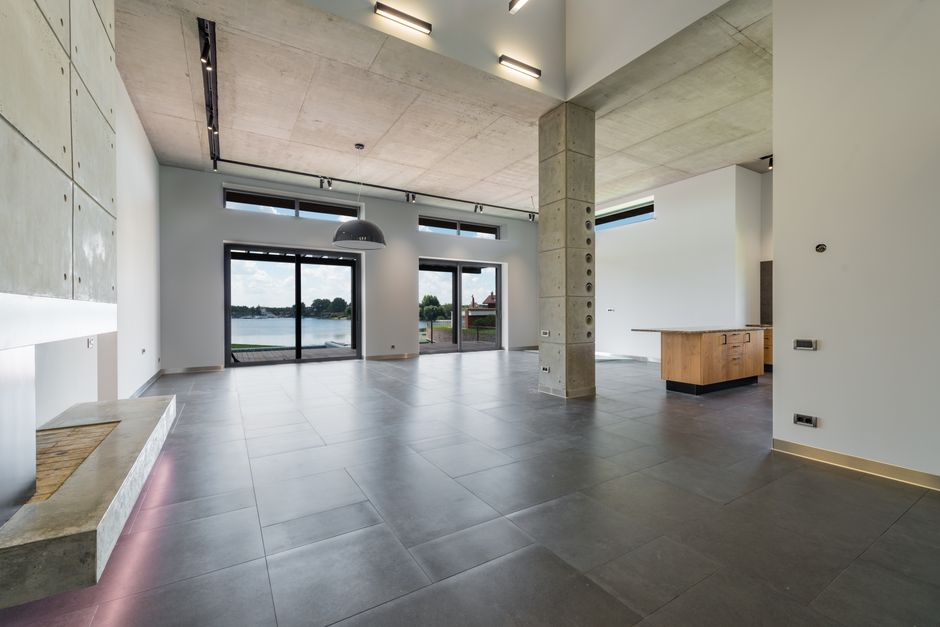
Weighing the polished concrete floors pros and cons for homes comes down to your lifestyle, your layout, and your priorities. Ask yourself: Do you value a low-maintenance, long-lasting finish over comfort underfoot? Are you building on a well-constructed concrete slab? Is your aesthetic leaning toward clean lines and modern minimalism rather than warmth and texture?
If you answered yes to most of those, polished concrete deserves serious consideration. If you have young children who spend time on the floor, elderly family members who need extra slip safety, or bedrooms you want to feel cosy, plan to supplement concrete with rugs or reserve it for living areas and kitchens only.
The most important step before committing is a site assessment by an experienced flooring contractor. The condition of your existing slab, the layout of your home, and the finish you have in mind all need professional eyes before pricing or planning can be finalised. A good contractor will tell you honestly what’s achievable and flag any risks early.
FAQ
Is polished concrete flooring slippery when wet?
It can be, particularly with a high-gloss finish. The risk is managed by adding a slip-resistant additive to the sealer, which is standard practice for wet-area applications like kitchens and bathrooms. Ask your contractor specifically about the slip resistance rating of the sealer they plan to use.
How long does polished concrete flooring last in a home?
A well-installed polished concrete floor on a sound slab can last 40 to 50 years or longer with basic maintenance. The sealer will need reapplication every 5 to 10 years depending on foot traffic, but the concrete substrate itself is essentially permanent.
Can polished concrete floors be installed over an existing concrete slab?
Yes, in most cases. The existing slab must be assessed for cracks, levelness, and structural integrity first. Minor cracks can be repaired before grinding, but a severely compromised or uneven slab may need remediation work. A professional assessment will confirm what’s feasible for your specific situation.
How do I maintain and clean polished concrete floors?
Daily cleaning is simple: sweep or vacuum to remove grit, then damp mop with a pH-neutral cleaner. Avoid acidic cleaners like vinegar, which can dull the sealer over time. Wipe up spills promptly, especially acidic liquids like citrus juice. Reseal the surface every 5 to 10 years to maintain the finish and stain resistance.
Is polished concrete suitable for bedrooms and bathrooms?
It can work in both, but with caveats. In bedrooms, the surface can feel cold in air-conditioned spaces, so rugs are advisable. In bathrooms, a slip-resistant sealer is essential, and many homeowners prefer to combine polished concrete in dry zones with tile in the shower recess. Professional specification for these rooms is particularly important.